Supplemental Tools
In addition to the Fire Weather Intelligence Portal, the North Carolina State Climate Office has developed a number of supplemental decision support tools for viewing and contextualizing weather and fire danger data.
Fire Danger Digest
- Link: https://products.climate.ncsu.edu/fire/tools/digest/
- Region: North Carolina only
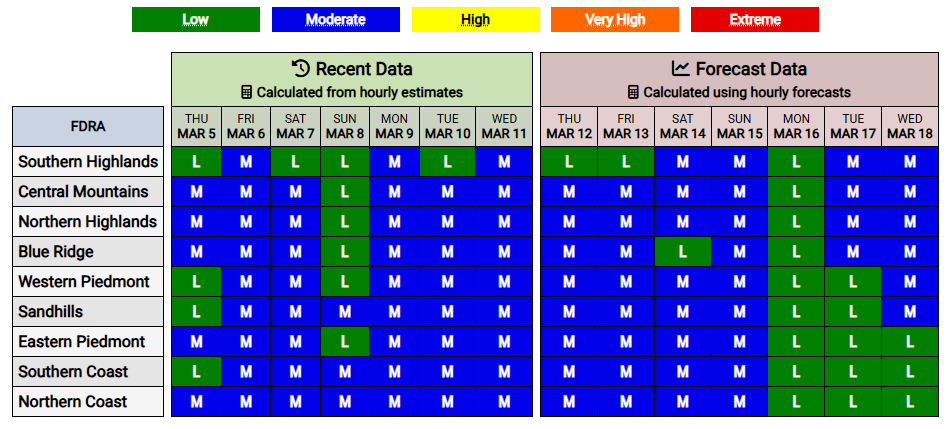
As a companion to our public-facing fire danger map, this tool provides a more detailed view of recent and forecasted fire danger for Fire Danger Rating Areas across North Carolina. These daily Adjective Ratings are calculated using Energy Release Component data from stations within each region.
Daily Summary Tool
- Link: https://products.climate.ncsu.edu/fire/tools/daily/
- Region: all 13 states in USFS Southern Region

This tool provides a convenient way to view daily aggregated (maximum, minimum, and average) weather and fire danger data in a tabular format. Weather stations can be grouped by forest service districts or Fire Danger Rating Areas, and regional averages are also included.
Note: This replaces the functionality of the NFDRS Data Viewers and the data availability information from the Station Status tool.
Hazard Assessment Tool
- Link: https://products.climate.ncsu.edu/fire/tools/hazard/
- Region: North Carolina only
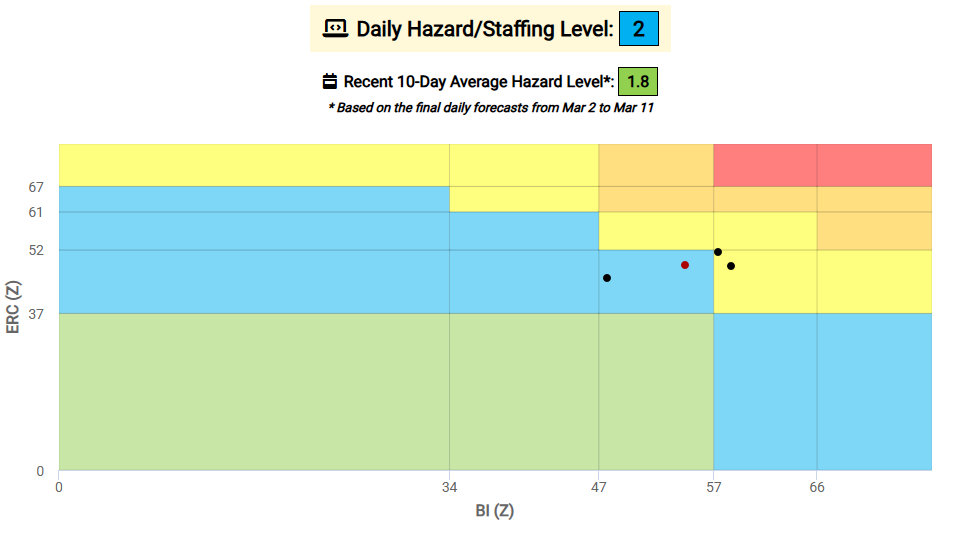
This tool is intended for district foresters in North Carolina to help set daily readiness plan levels. Forecasted fire danger data from weather stations in each Fire Danger Rating Area across the state can be used to determine hazard or staffing levels based on historical thresholds.
Quality Control Viewer
- Link: https://products.climate.ncsu.edu/fire/tools/qc/
- Region: North Carolina only

Develop for the North Carolina Forest Service using the North Carolina State Climate Office’s ECONet QC algorithms, this tool provides a visual summary of quality control flags for RAWS stations across the state to supplement the daily email reports sent to selected staff.
Weekly Outlook Tool
- Link: (under renovation)
- Region: North Carolina only
This tool shows 7-day forecasts in a matrix-based display, color-coded using historical percentiles from days with fire activity or as determined by other key thresholds. As of October 2025, those historical percentiles and thresholds are currently being re-evaluated based on updated fire danger data from FEMS.